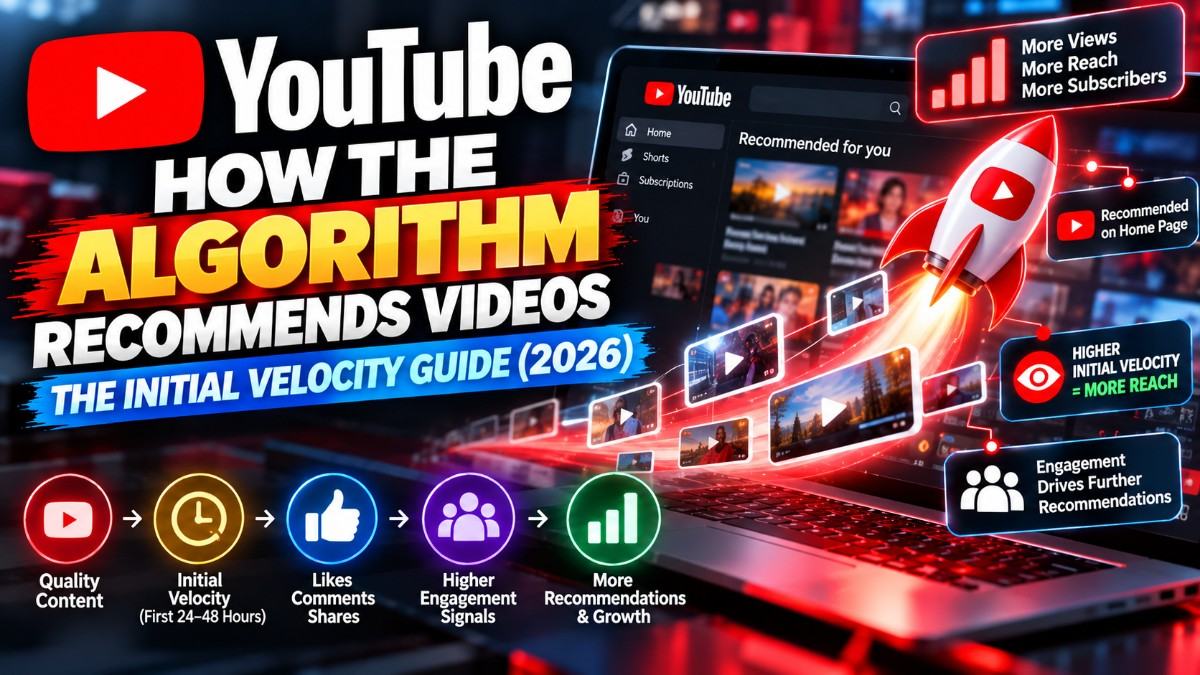
YouTube’s recommendation engine relies on initial viewer velocity—how quickly an upload accumulates high Click-Through Rate (CTR) and deep Average View Duration (AVD) within its first 2 to 4 hours. Creators jumpstart algorithmic momentum using verified high-retention views from a dedicated YouTube SMM panel, while relying on the best SMM panel in India for automated dispatch.
Publishing a high-production video only to see it stall at 50 views is a frustrating reality for many creators. The common misconception is that YouTube promotes channels based on total subscriber count. In reality, YouTube’s recommendation architecture evaluates videos individually based on mathematical behavioral feedback.
Whether you run a personal brand or manage dozens of client channels at a digital agency, understanding the mechanics behind Browse Features and Suggested Videos allows you to engineer upload velocity that forces YouTube’s neural network to push your content.
The Two Recommendation Systems: Browse vs. Suggested
YouTube uses two distinct algorithmic pipelines to recommend videos to users across desktop and mobile devices:
1. Browse Features (Homepage & Subscriptions)
Focuses on viewer history and broad affinity. When users open YouTube, the homepage displays content matching their recent watch topics. Performance here depends heavily on thumbnail CTR and initial viewer engagement.
2. Suggested Videos ("Up Next" Sidebar)
Focuses on viewer session chaining. YouTube analyzes which video the user is currently watching and recommends content likely to extend the session. Performance here depends on Average Percentage Viewed (APV).
The Initial Velocity Testing Loop Explained
When you publish a new video, YouTube does not show it to millions of users immediately. It puts your video through a multi-stage testing loop:
If your video falters in Stage 1 with low CTR or brief 10-second drop-offs, the testing loop terminates immediately. The video is archived as a low-interest upload and impressions drop to zero.
How to Trigger Stage 2 and Stage 3 Amplification
1. Target an 8%+ Click-Through Rate (CTR)
Your thumbnail and title are your packaging. Use high-contrast color palettes, bold focal points, and clear emotional curiosity hooks. Avoid repeating the video title verbatim inside the thumbnail text; treat the title and thumbnail as complementary clues.
2. Eliminate the "Intro Dip" in the First 30 Seconds
YouTube Studio analytics show that 30% to 50% of viewers abandon videos within the first 30 seconds if greeted by animated logos, lengthy musical intros, or generic channel introductions. Hook the viewer immediately by confirming the outcome promised in the thumbnail within the first 5 seconds.
3. Supplement Early Velocity with High-Retention Delivery
New channels with small subscriber bases struggle to generate the initial velocity needed to exit Stage 1. Creators use verified high-retention view packages delivered within the first upload window to signal steady viewer playback and positive behavioral engagement to the algorithm.
Frequently Asked Questions
What is initial viewer velocity on YouTube?
Initial viewer velocity refers to the speed at which a newly published video accumulates views, high click-through rates (CTR), and deep audience retention within its first 2 to 4 hours. High velocity signals to the algorithm that the video has viral or trending potential.
How does YouTube decide to put a video on the homepage (Browse Features)?
YouTube tests new uploads on a small sample of impressions. If the video achieves a click-through rate above 8% to 10% and an Average Percentage Viewed (APV) above 50%, the algorithm expands distribution to broader user homepages under Browse Features.
Can purchasing high-retention views trigger YouTube recommendations?
Yes. Sourcing genuine, high-retention views within the initial upload window simulates viewer demand and high retention graphs, encouraging the algorithm to test the upload against broader organic audience pools.

About Kavesh Arora
Kavesh Arora is the Founder of All Media Promotion and an SMM infrastructure specialist. He has spent over a decade researching algorithmic recommendation systems, viewer retention modeling, and high-speed API fulfillment for social video platforms.
Chat on Telegram →Ready to boost your video velocity? Explore algorithmic growth packages on our dedicated YouTube SMM panel today.